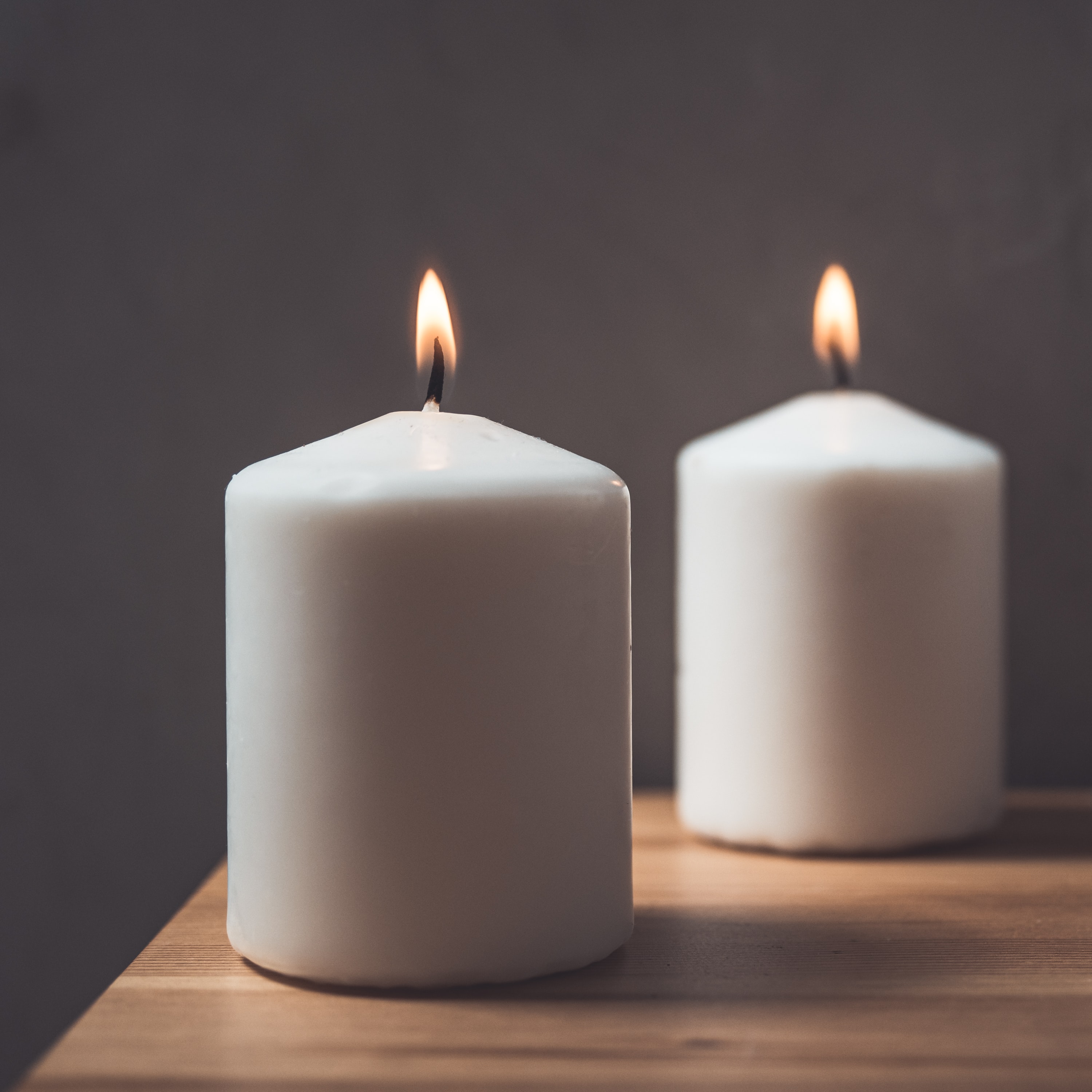
Candle making is creative and versatile. Using different types of wax, colours, fragrances and wicks, you can produce candles that suit your style, quality standards and product range.
Whether you want to make candles yourself, develop DIY-style candles or build your own candle collection, the basic steps of candle production always remain the same: melting the wax, incorporating colour and fragrance, fixing the wick, pouring and allowing the candle to cure.
In this guide, you will learn which materials you actually need for candle making and how to melt and process wax correctly. You will also become familiar with typical mistakes in candle pouring, so that you can avoid them from the outset and consistently produce high-quality candles.
High-quality products for candle making are available in our shop. In the respective product descriptions, you will find important information such as melting point, processing temperature and recommended dosage.
At a glance
-
To pour candles yourself, you mainly need the right materials: a suitable wax, the correct wick size, a clean water bath and patience during curing.
-
The basic steps of candle making always remain the same: melt the wax, incorporate colour and fragrance, fix the wick, pour, allow to rest.
-
Typical issues such as sinkholes, air bubbles or unstable flames can be avoided by using the correct temperature, wick selection and pouring technique.
What do I need to make candles?
To process candle wax cleanly and in a controlled manner, you will need some basic tools and raw materials.
The foundation is a water bath: a pot with hot water and a heat-resistant melting container made of glass or stainless steel, placed in or suspended over the water. In this setup, the wax melts slowly and evenly until it is completely liquid and can later be poured cleanly into a container or mould.
Tip: Stir occasionally to dissolve any lumps and keep the temperature stable.
A wax thermometer is essential. Each type of wax has its own melting point and also a flash point. To ensure that colour and fragrance mix well later on and that you can work safely, the wax should not be heated more than necessary.
Before you start, you should also know how much wax you need for your candles. This quantity is crucial for the later dosing of colour and fragrance oil. In the product descriptions in our shop, you will find information on recommended dosages and suitable temperature ranges for each colour and fragrance oil.
Choosing the correct wick size also plays a central role in candle making. It depends both on the container diameter and on the type of wax used. In our wick category, you will find various wicks, including candle wicks, tealight wicks and flame bowl wicks, which are used depending on the candle type.
Once everything is prepared, you can start making candles straight away.
In brief: materials required for candle making
Alongside other candle accessories, you will find these materials clearly organised in our shop, allowing you to select everything for your candle making in one place and in a coordinated way.
Prepare the following materials:
- Candle wax
- Pot + water bath
- Melting container
- Wax thermometer
- Stirring spoon
- Wick centring device
- Wicks (cotton or wood)
- Candle jars or candle moulds
- Candle dyes or lacquers (optional)
- Candle fragrance oils (optional)
- Decorative elements such as dried flowers (optional)
The choice of the right wax
The choice of wax influences not only appearance and fragrance, but also wick selection, pouring temperature and the subsequent burn behaviour. All of the candle waxes mentioned are available, along with other variants, in our shop.
-
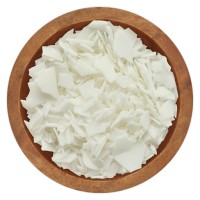
Soy wax C-3 is optimised for container candles, particularly in glass. It is characterised by good fragrance binding and a smooth, even surface.
-
Rapeseed wax 5761 is often used for free-standing, delicate natural wax candles poured into silicone moulds. It provides a stable structure and a calm burn.
-
Paraffin wax with a higher melting point (e.g. 58–60 °C) is well suited for pillar candles, as it cures with good shape stability and allows for clean edges.
-
Rapeseed–coconut wax Elite 600 is well suited for natural tealights as well as for scented candles in glass, as it processes evenly and enables a stable burn behaviour.
-
Beeswax is characterised by a very long burn time and a distinctive natural scent. It is particularly suitable for natural, untreated candles.
By the way: leftover wax can be reused brilliantly. Simply pop the candle jar into the freezer for about an hour – the wax will contract and can then be broken out with ease. Melt it down and pour it through a fine sieve to remove any wick residue and impurities. Try to mix only the same types of wax where possible, and always use a fresh wick – old wicks no longer burn evenly once they've been used.
How much wax do I need for a candle?
Before you start making candles, it is helpful to know how much wax you need. This allows you to dose colour and fragrance accurately later on.
Proceed as follows:
-
Place your candle jar on a set of scales.
-
Fill the jar with water up to the height your candle should later reach.
-
Read the weight of the water in grams and subtract 10% (weight × 0.9).
→ The result corresponds to the approximate amount of wax you should plan for this container.
Tip: If you want to use fragrance oil, subtract the planned fragrance amount from the calculated wax weight.
Good to know: This method is also suitable for silicone moulds. Make sure that jars and moulds are completely dry before pouring.
In this video, we explain it using an example: (English subtitles available)
Step-by-step guide: making candles yourself
Once your materials are prepared, you can begin candle making.
Work calmly and in a controlled manner, as many issues arise from excessive temperatures or working too quickly. A structured process helps you reliably reproduce results and maintain consistent candle quality over multiple batches.
-
Prepare the water bath
Fill a pot with water and heat it on the hob. The water should be hot but not boiling. Place a heat-resistant melting container (e.g. a second pot, a metal ladle or a stainless steel melting jug) in or over the pot of water and add the wax to this container.
The water bath ensures that the wax melts evenly and in a controlled way, without being exposed directly to the heat source. This allows better temperature control and helps prevent overheating. Double-walled pots from chocolate processing are also suitable for wax. Temperature-controlled appliances such as the Thermomix can also be used.
-
Melt the wax
Add the required amount of wax to the melting container. Stir occasionally to dissolve any lumps and distribute the heat evenly. Always keep an eye on the temperature and remain below the flash point.
The correct processing temperature depends on the specific wax. Soy wax is often processed at around 60–70 °C, while paraffin is usually processed at higher temperatures. Exact ranges can be found in the product descriptions for the individual wax types.
-
Incorporate colour and fragrance oil
First stir the candle dye into the fully melted wax, then add the fragrance oil. Work slowly and evenly so that both additives combine well. Dyes need some time to dissolve completely. Fragrance oil should be incorporated at the temperature recommended for the respective wax so that it remains stably bound in the wax.
Tip: If fragrance oil is overheated, it can partially evaporate. The candle will then smell noticeably weaker than expected. Therefore, add the fragrance oil only after the colour has fully dissolved and shortly before pouring, and do not heat the wax strongly or for extended periods afterwards. When making scented candles, observe the recommended dosages. Too much fragrance oil can negatively affect burn behaviour and lead to an unstable or flickering flame. Excessively high temperatures also impair fragrance binding and can cause bubbles or an uneven surface.
-
Insert the wick
Fix the wick centrally in the jar or mould. Use a wick holder or candle wick stickers to secure the wick to the base of the jar.
Tip: The straighter it is positioned, the more evenly the candle will burn later. Make sure that the wick sits firmly against the bottom of the container.
-
Pour the candle
Pour the liquid wax slowly into the container or mould. Make sure that the wick does not shift. The calmer you pour, the fewer air bubbles will form. How full you fill the container is up to you. Many leave a small margin at the top, while others fill to just below the rim.
Tip: Set aside a small amount of wax for topping up later. If a slight depression forms during cooling, you can compensate for it afterwards.
-
Allow the candle to cool
Leave the candle to cure completely for at least 24 hours in a calm, room-temperature environment. Draughts, cold surfaces or direct heat from radiators can affect the surface.
Some waxes – especially soy and rapeseed wax – only develop their fragrance optimally after a short curing period of several days.
Your candle is now finished and provides a foundation on which more complex designs, colour layers or consistent fragrance combinations can be built.
Avoiding mistakes – common pitfalls in candle pouring
Even with careful work, minor irregularities can occur when pouring candles. Most of these are related to temperature, pouring technique or the coordination of wax, wick and additives, and can be well controlled with a little experience.
An overview of the most common pitfalls:
-
Sinkholes: Caused by wax shrinking as it cools → targeted topping up evens out the surface.
-
Air bubbles: Caused by pouring too quickly or cold containers → slow pouring and gently pre-warmed jars help.
-
Frosting in soy wax: A natural, crystalline appearance → can be reduced by maintaining constant room temperatures and adjusted pouring temperatures.
-
Unstable or flickering flame: Usually a sign of an unsuitable wick size or excessively high fragrance or colour dosage.
Understanding these relationships allows you to control candle quality deliberately and achieve reproducible results.
Correctly dosing colour and fragrance
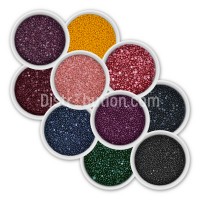
Candle dyes are highly concentrated and should always be dosed sparingly. Start with a small amount and increase gradually if necessary until the desired colour shade is achieved. This keeps the wax stable and the surface even.
Fragrance oils are generally dosed at around 6–10% relative to the wax amount in candle making. The exact amount depends on the wax type and fragrance intensity. Excessive dosages can negatively affect burn behaviour, surface quality and flame stability.
Creative ideas for your candle range
Once you have mastered the basics of candle making, numerous opportunities open up to further develop your candle range in a targeted way. Colours, shapes, wicks and fragrances can be combined to create not only individual candles, but also coherent series, themed lines or seasonal collections.
Whether minimalist container candles, scented candles for different seasons, layered candles with colour gradients or candles with wooden wicks – creative ideas help differentiate your offering and create recognisable designs.
Working safely when making candles
Although candle making appears straightforward, it involves working with hot wax and elevated temperatures. Make sure that your water bath is stable, no moisture enters the wax and that you can control the temperature at all times. Wax should never be heated unattended.
Burning wax must never be extinguished with water. Switch off the heat source and smother the fire with a lid or a fire blanket. Then allow everything to cool completely.
A calm workflow and a clean, well-organised workspace contribute significantly to safe and reproducible results.
Conclusion
With the right technique, candle making is not a complicated undertaking, but a well-structured and predictable process.
Whether you are taking your first steps or want to build your own product range, this guide provides a solid foundation. Suitable products for candle making are always available in our shop, so that your candles turn out exactly as you envision them.
Frequently asked questions
Here you will find answers to questions that regularly arise in candle making.
How much fragrance oil may I use?
The recommended fragrance oil amount is often between around 6–10% relative to the wax amount, depending on the wax and fragrance strength. Start with a lower dosage and test different values, as too much fragrance oil can negatively affect burn behaviour and the surface of your candles.
Which wax is suitable for scented candles?
Soy and rapeseed wax bind fragrance particularly evenly and are therefore well suited for scented candles. Paraffin highlights colours more strongly and produces very smooth surfaces.
Which wick size do I need?
The appropriate wick size depends on the container diameter, wax type and fragrance and colour additives. A general specification is not possible; wick recommendations and test candles provide guidance.
Why does a dip form in the centre of the candle?
Wax shrinks as it cools. This can result in a slight depression in the centre. Targeted topping up evens out the surface.
How long does a candle need to cure?
Allow the candle to cure completely for at least 24 hours. Especially for scented candles made from soy or rapeseed wax, an additional curing period of several days significantly improves fragrance throw.
How can I avoid soot or flickering?
A more suitable wick size or a more restrained dosing of colour and fragrance often helps. Even pouring and clean working practices also contribute to a stable burn.
Mini glossary – key terms explained simply
Flash point
The temperature at which wax can ignite. This value should always be kept below during processing.
Melting point
The temperature at which the wax becomes liquid. It varies depending on the wax type.
Wick size
The thickness of the wick, matched to container diameter, wax type and additives. An incorrect wick size can lead to tunnelling, soot or an unstable flame.
Tunnelling
If the candle burns only in the centre and a rim remains, this is referred to as tunnelling. The wick is often too small.
Frosting
Natural, crystalline streaks in soy wax. Visually characteristic and harmless.
Curing time
The period after pouring during which wax and fragrance fully cure and bond stably. Particularly important for scented candles made from soy or rapeseed wax.