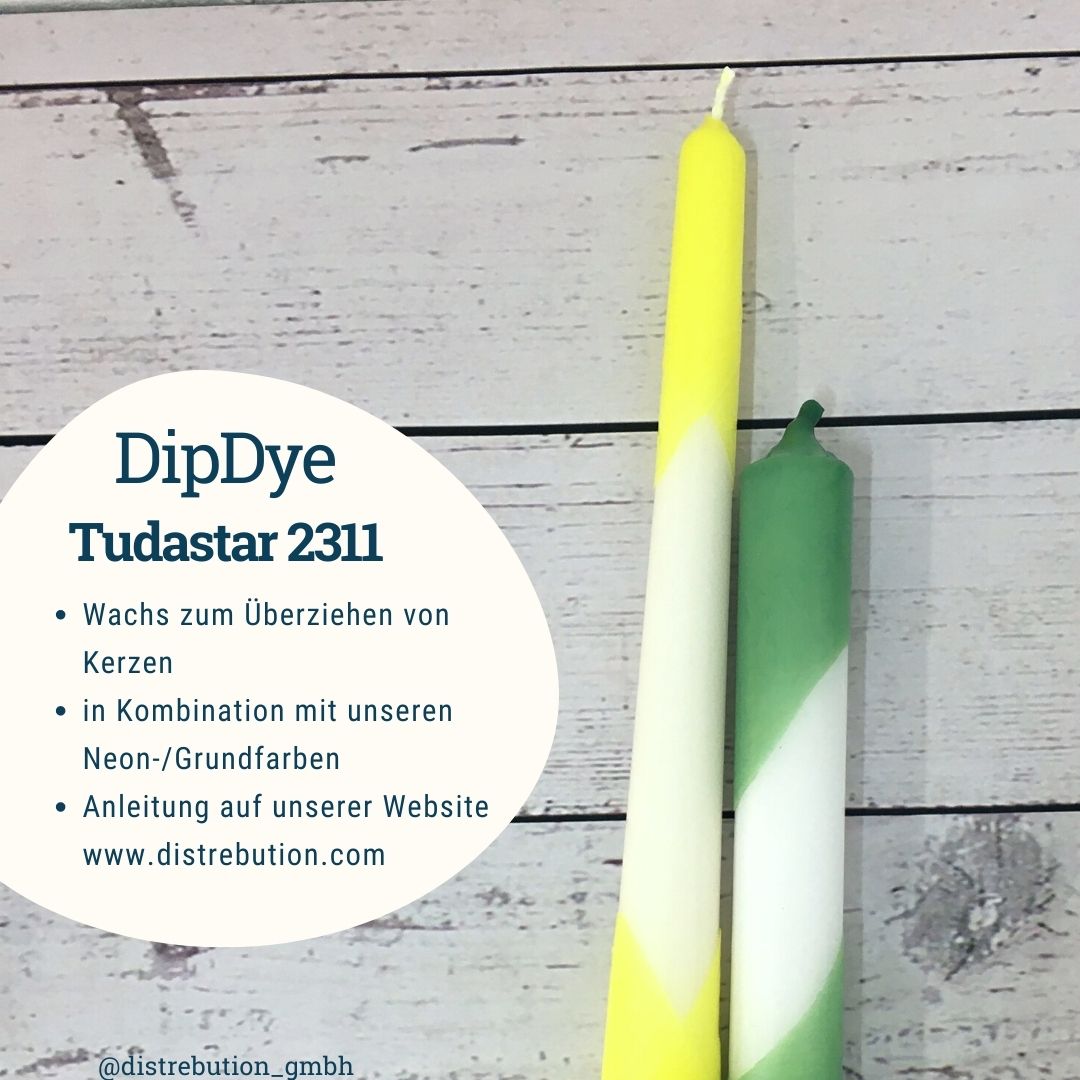
Dip dye candles are made by dipping taper candles into coloured, liquid dipping wax. The wax settles as an even layer on the candle, producing clearly defined colour zones or soft gradients. This guide explains which materials you need, how the technique works step by step, and which mistakes can be avoided from the outset.
At a Glance
- Taper candles are dipped in coloured dipping wax (Tudastar 2311 pastilles) – not in water
- Once set, the dipping wax forms a hard, smooth colour layer on the candle
- Colour gradients are achieved by dipping multiple times at decreasing depths
- Suitable for taper candles made from rapeseed wax 5761 or paraffin 58/60
What Are Dip Dye Candles?
"Dip dye" means dip dyeing. With dip dye candles, taper candles are dipped into liquid, coloured wax that forms a coloured outer layer. Depending on the dipping depth and number of passes, the result is either clearly defined colour zones or soft gradients from one colour to another.
What makes this technique distinctive is that the dipping wax has a higher melting point than standard candle wax. It produces a harder, smoother surface than melted candle remnants and is easier to work with precisely. This makes the technique particularly well suited to consistent, repeatable production.
What You Need
Before you begin, prepare the following:
- Taper candles made from Rapeseed Wax 5761 or Paraffin 58/60
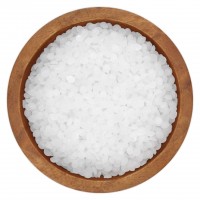
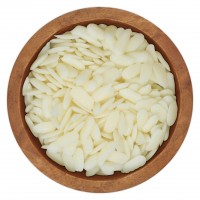
- Dipping Wax Tudastar 2311
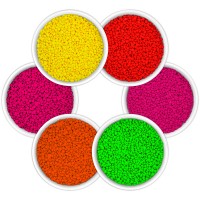
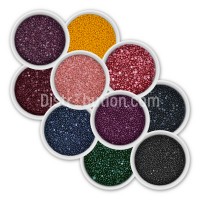
- Neon Candle Dyes (Series 2501) or Base Dyes (Series 2803)
- Tall, narrow jars or tins (one per colour)
- Pot for the water bath
- Thermometer
- Wooden stick for stirring
- Baking paper as a base
- Somewhere to hang the candles by the wick
How to Make Dip Dye Candles: Step by Step
Once all materials are to hand, you are ready to start.
1. Prepare the Dipping Wax
Fill the dipping wax into tall, narrow jars or tins. Use a separate container for each colour. Place the vessels in a pot of water and heat the water bath until the dipping wax has melted completely. The water should be just below boiling point but not boiling. Tall, narrow containers have the advantage of allowing the candle to be submerged more deeply. Do not fill the containers to the brim, as the wax will be displaced when the candle is dipped.
2. Add the Dye
Add the candle dye to the liquid dipping wax at approx. 75 °C and stir it in fully. For vivid, saturated colours, we recommend the Neon Candle Dyes (Series 2501). These contain pigments that distribute particularly well in dipping wax. The dosage is a maximum of 1%. For pastel shades, the Base Dyes (Series 2803) are suitable at a maximum of 0.2%. Our dyes are highly concentrated – start with 2–3 pastilles and adjust as needed.
Pro Tip: Mixing Colours
The dyes can be mixed with one another to create custom shades. Add a base colour to the wax first, then add the second colour gradually until you reach the desired tone. Stir the wax thoroughly before each dipping pass to prevent the colour from settling.
3. Dip the Candles
Hold the taper candle by the wick and dip it swiftly into the coloured dipping wax. The candle should only remain in the wax briefly – the dipping wax sets quickly once the candle is exposed to air. Allow the candle to cure after each pass before dipping again or changing colour.
Pro Tip: Achieving Colour Gradients
For a colour gradient, dip the candle deeply on the first pass. On the second pass, dip it less far – this creates a lighter zone in the upper area where only one layer sits. With each further pass at a decreasing depth, the gradient becomes softer. For a two-colour gradient, work with two separate dye baths in succession: colour A from the bottom first, then colour B from the other side.
4. Allow to Drip and Set
Allow the freshly dipped candle to drip briefly over the container. Then hang it by the wick or place it on baking paper. The dipping wax sets quickly – usually within a few minutes. For multiple layers, wait until the previous layer has set completely before dipping again.
5. Allow Sufficient Curing Time
Leave the finished dip dye candles to cure completely at room temperature. The more layers applied, the longer this takes – allow 1–3 hours. Do not dry the candles near heat sources, as heat can damage the colour layer.
Which Colour Combinations Work Well for Dip Dye Candles?
The easiest starting point is two shades that sit close together – pink and old rose, for example, or light blue and teal. For a third zone, white works well as a transition between them: light blue, white, and teal creates an almost natural gradient. For more contrast, terracotta and cream or black and white also work well.
Worth bearing in mind: colours look more intense in liquid wax than after setting. On coloured candles, the base colour may show through slightly.
Common Mistakes – and How to Avoid Them
-
The colour layer cracks or breaks: The dipping wax was too hot or the candle too cold. Make sure the wax has cooled to approx. 75–80 °C before dipping. If the candle is very cold, allow it to come to room temperature first.
-
The colour is uneven or patchy: The wax was not stirred thoroughly or had already cooled. Stir the wax before each pass and keep it at a steady temperature in the water bath.
-
The colour layer is too thick: Left in the wax too long, or too many layers applied at once. Dip the candle briefly and allow each layer to set completely before applying the next.
-
The colour appears too pale on the candle: Too little dye in the wax. Increase the amount gradually, but do not exceed the maximum dosages (neon dyes 1%, base dyes 0.2%). Colours often appear stronger in liquid wax than after setting.
-
The candle deforms: The dipping wax was too hot. Check the temperature with a thermometer and work at approx. 75–80 °C.
Frequently Asked Questions about Dip Dye Candles
What are dip dye candles?
Dip dye candles are taper candles given a coloured outer layer by dipping them in liquid, coloured dipping wax. The result is either clearly defined colour zones or soft colour gradients, depending on the dipping depth and number of passes. The technique works equally well for white and coloured taper candles.
Which wax is suitable for dip dye candles?
For dip dye candles, we recommend a specialist dipping wax, such as our Dipping Wax Tudastar 2311. It has a higher melting point than standard candle wax and forms a hard, smooth surface once set. Standard candle wax is too soft for this technique and will not produce an even layer.
Which dye is suitable for dip dye candles?
For vivid, saturated colours, the Neon Candle Dyes (Series 2501) are the right choice. They are pigment-based and distribute evenly in dipping wax. Important: neon dyes should not be mixed directly into candle wax, as the pigments can clog the wick. For pastel shades, our Base Dyes (Series 2803) are the better option.
What is the dip-dye method?
With the dip-dye method, taper candles are briefly dipped in liquid, coloured dipping wax. The wax settles as an even layer on the candle and produces a coloured surface once set. By dipping multiple times at decreasing depths, colour gradients are created. The method differs from dip marbling, in which candle dye is applied to water and produces organic marble patterns rather than clearly defined colour zones.
Conclusion: Dip Dye Candles Are Simple to Produce
With the right materials, dip dye candles can be made quickly and consistently. The key difference from simpler methods using candle remnants lies in the dipping wax: Tudastar 2311 produces a harder, more even surface and takes colour precisely.
Different colours, dipping depths, and numbers of layers allow for individual designs – from strong single-colour finishes to soft multi-colour gradients. All the products you need for this guide are available in our shop.
Share your results on Instagram and tag @distrebution_gmbh. We look forward to seeing what you create.